

What Makes Currency Prices Move?
If you’re new to Forex, one of the most useful questions you can ask is: what actually makes a currency price move?
The short answer is changes in supply and demand for one currency relative to another. But supply and demand don’t change randomly. They are influenced by interest rates, central-bank expectations, inflation, economic growth, trade, commodity prices, political events, and investors’ willingness to take risk.
There is another important piece: expectations.
Forex prices can move before an economic event happens because traders are already positioning for what they expect. They can also move very little after seemingly important news if that news was already fully anticipated.
That is why understanding what moves currency prices isn’t simply a matter of memorising economic indicators. You need to understand how new information changes expectations about the future.
 Before looking at what drives exchange rates, it helps to understand what Forex trading is and what you’re actually buying and selling.
QUICK ANSWER
Currency prices move when demand for one currency changes relative to another. That demand is influenced by interest rates and central-bank expectations, inflation, economic growth, employment data, trade and commodity prices, political and geopolitical developments, and global risk sentiment.
⇒ Source: The Federal Reserve also explains the relationship between the foreign exchange value of the US dollar and Federal Reserve policy.
The most important beginner concept is expectations. Forex markets are forward-looking, so a currency may rise or fall based on how new information changes expectations about future interest rates, economic conditions and investment returns. A piece of “good” economic news can therefore cause a currency to fall if it was already expected or changes expectations in an unfavourable way.
The basic idea: currencies move relative to each other
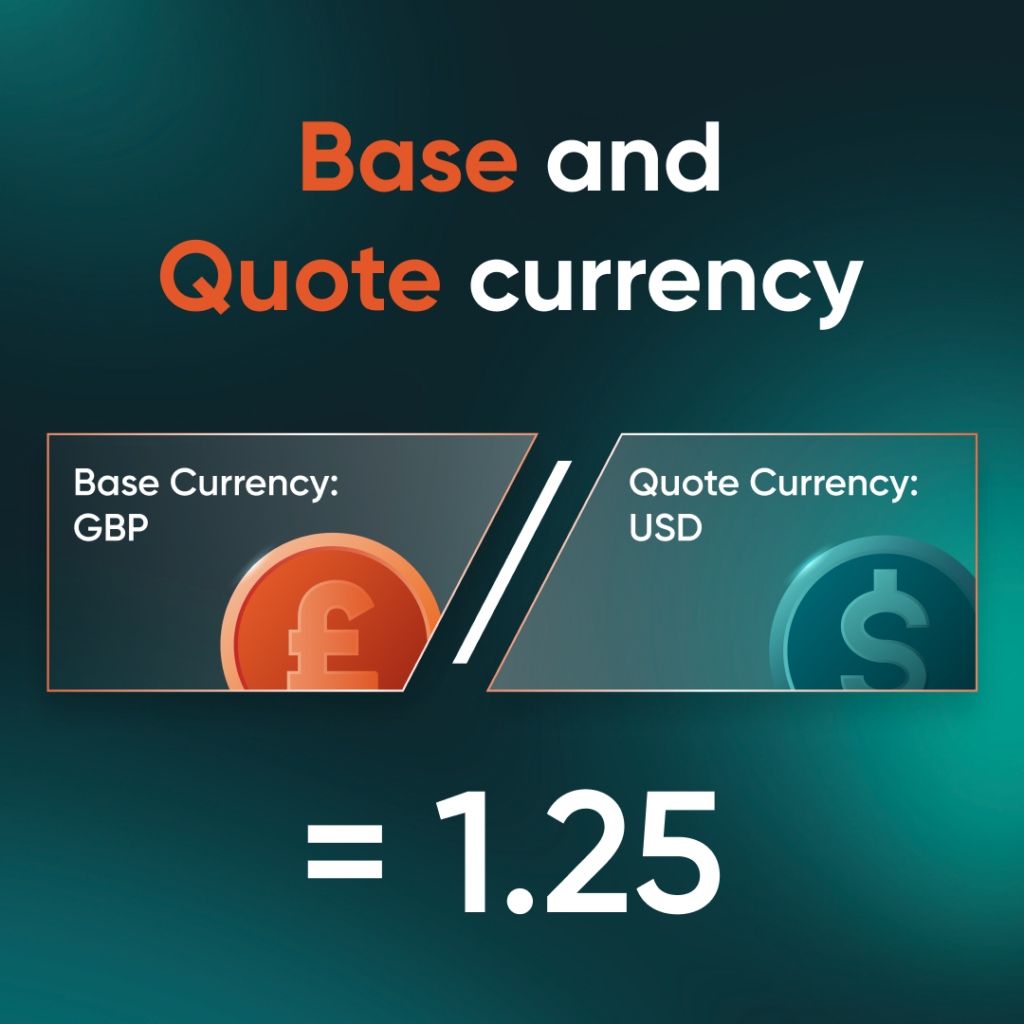
A Forex pair always compares two currencies.
For example, EUR/USD tells you how many US dollars are required to buy one euro. If EUR/USD rises from 1.0800 to 1.0900, the euro has strengthened against the US dollar, or the dollar has weakened against the euro.
The same principle applies to NZD/USD, GBP/USD, USD/JPY and other pairs.
Because every exchange rate compares two currencies, learning what a currency pair is is essential to understanding why its price rises or falls.
This creates an important rule for beginners:
A currency doesn’t need to be “strong” in absolute terms. It only needs to become stronger or weaker relative to the currency you’re comparing it with.
Suppose New Zealand interest rates are expected to remain relatively attractive while US rates are expected to fall. Investors may reassess the relative attractiveness of NZD and USD assets. That can increase demand for NZD relative to USD and put upward pressure on NZD/USD.
But if expectations change in the opposite direction, the pair can move the other way.
The relationship is rarely as simple as “higher interest rates = stronger currency.” The reason behind the rate change, its expected duration, inflation expectations and the reaction of other markets all matter.
Once you understand the main forces behind currency movements, you can see more clearly how Forex trading works in practice.
The major factors that move currency prices
| Factor | Why it can affect a currency | Simple example |
|---|---|---|
| Interest rates | Change the relative attractiveness of financial assets | Expected rate cuts may weaken a currency |
| Central-bank expectations | Markets price future policy, not just today’s rate | A hawkish statement can strengthen a currency |
| Inflation | Influences purchasing power and monetary policy | Persistent inflation can affect expected rates |
| Economic growth | Changes expectations for investment and future policy | Stronger growth may support demand for a currency |
| Employment and wages | Can influence economic strength and central-bank decisions | Strong jobs data may alter rate expectations |
| Trade and current-account conditions | Affect cross-border flows of goods, services and capital | Strong export demand can support a currency |
| Commodity prices | Particularly important for commodity-exporting economies | Higher export prices can support AUD or NZD |
| Political/geopolitical risk | Changes perceptions of economic and financial risk | A crisis can trigger demand for perceived safe-haven currencies |
| Market risk sentiment | Influences how investors allocate capital globally | Risk aversion can cause large moves across currencies |
| Market expectations | Determines how surprising new information is | A surprise rate decision can move prices sharply |
No single factor controls Forex prices all the time.
You can apply these ideas to widely traded major Forex pairs, where economic and monetary-policy developments can generate significant market interest.
1. Interest rates and central-bank expectations
Interest rates are among the most closely watched fundamental drivers of currencies.
Imagine two countries that are otherwise similar. If investors can potentially earn a higher return on comparable assets in one country, that can make its financial assets more attractive. This can increase demand for its currency.
Central banks therefore matter enormously.
When a central bank changes its policy rate, or signals that future rates may be higher or lower than previously expected, financial markets can react quickly. The Federal Reserve, European Central Bank, Bank of England and Reserve Bank of New Zealand are examples of central banks whose decisions can influence major currency markets.
The relationship is about relative monetary policy.
If markets suddenly expect US interest rates to stay higher for longer while expectations for another country’s rates fall, USD may gain against that currency.
⇒ Source: Research from the IMF explains how interest rates and exchange rates can be connected through expected returns and interest-rate differentials.
But there’s an important beginner trap: don’t look only at the current interest rate.
Markets care about the expected path of interest rates.
The IMF notes that exchange rates are influenced by actual and expected relative rates of return, including expected interest-rate differentials and expected currency movements.
⇒ Source: Interest-rate expectations are central to currency markets, making the RBNZ’s explanation of the Official Cash Rate (OCR) useful background for NZD analysis.
What this means for a beginner
When watching a central-bank announcement, don’t just ask:
- Did the central bank raise or cut rates?
- What is the interest rate now?
Also ask:
- Was the decision expected?
- What did the central bank say about future policy?
- Did its outlook change?
- How did markets’ expectations for future rates change?
That is often where the larger currency reaction comes from.
2. Inflation
Inflation measures how quickly prices for goods and services are rising.
It matters to Forex because persistent inflation can influence central-bank policy, interest rates, household spending, economic growth and investors’ expectations.
Suppose inflation in Country A unexpectedly rises. Traders may conclude that the central bank will need to keep interest rates higher for longer. If that interpretation increases the expected return on Country A’s assets relative to another country, its currency may strengthen.
But inflation isn’t automatically positive or negative for a currency.
Very high inflation can damage purchasing power and economic confidence. If markets believe inflation will undermine an economy or force an unsustainable policy response, the currency could weaken instead.
The relationship therefore depends on why inflation changed and what markets expect policymakers to do about it.
3. Economic growth and economic data
Economic data provides clues about the health of an economy.
Common releases include:
- Gross domestic product (GDP)
- Employment and unemployment
- Wage growth
- Retail sales
- Manufacturing and services surveys
- Consumer confidence
- Business confidence
- Inflation reports
A stronger-than-expected economic report can cause a currency to rise, but it isn’t guaranteed.
The key phrase is “stronger than expected.”
Suppose traders expect an economy to add 100,000 jobs and the actual number is 150,000. That surprise may change expectations for economic growth and interest rates.
Now consider the opposite. If traders expected 200,000 jobs and the economy adds 150,000, the same 150,000 jobs could be interpreted negatively.
This is one of the most important ideas in understanding what makes Forex prices move:
Markets react to surprises and changes in expectations, not simply whether a number looks good or bad on its own.
4. Trade, exports and commodity prices
Currencies are also connected to international trade.
When a country exports goods and services, foreign buyers may need its currency to complete transactions. Imports create demand for foreign currencies. The broader balance of international payments and capital flows can therefore influence exchange rates.
Commodity prices can be particularly important for commodity-exporting economies.
Australia, for example, has a large commodity-exporting sector, and the Reserve Bank of Australia identifies terms of trade and commodity prices as important influences on the Australian dollar. It also notes that global risk sentiment can matter for shorter-term movements.
New Zealand has its own exposure to international commodity prices and global economic conditions.
This doesn’t mean:
higher commodity prices = NZD always rises.
Other factors can overwhelm the commodity effect. For example, global interest rates or a sudden increase in risk aversion can push currencies in the opposite direction.
⇒ Source: Commodity prices, terms of trade and global risk sentiment can also influence currencies, as explained in the Reserve Bank of Australia’s overview of the drivers of the Australian dollar exchange rate.
5. Political and geopolitical events
Currencies respond to uncertainty.
Elections, wars, trade disputes, sanctions, political instability, changes in government policy and unexpected geopolitical events can all alter expectations about an economy.
The important question isn’t necessarily whether an event is “good” or “bad.”
Instead, markets may ask:
- Will this affect economic growth?
- Will it change government spending?
- Could it affect inflation?
- Will central-bank policy change?
- Does it increase financial risk?
- Will international investment flows change?
A geopolitical shock can therefore produce a rapid currency move even when no major economic statistic was released.
6. Risk sentiment
Risk sentiment describes how willing investors are to take financial risk.
When confidence is high, investors may be more willing to hold assets perceived as riskier or more sensitive to global growth.
When fear rises, investors may reduce those exposures and move toward assets or currencies they perceive as safer.
The effect can be seen across multiple markets at once. Stock markets, bond yields, commodities and currencies can all react to the same change in global expectations.
The Reserve Bank of Australia describes risk sentiment as an important short-term influence on the Australian dollar and notes that the currency has tended to move with broader international financial markets at various points.
For a beginner, this explains why a currency can move even when nothing particularly important happened in that country’s economy.
The catalyst may have come from somewhere else.
7. Expectations are the missing piece
This is arguably the most important concept in understanding Forex movement.
Markets are forward-looking.
Suppose traders overwhelmingly expect the Reserve Bank of New Zealand to cut interest rates at its next meeting. The NZD could weaken before the meeting because traders are already adjusting their positions.
If the rate cut happens exactly as expected, there may be little additional reaction.
But imagine the central bank unexpectedly leaves rates unchanged and signals that further cuts are unlikely.
That would be new information.
The NZD could react sharply because traders now have to reconsider their assumptions about future interest rates.
This is why two apparently similar news events can produce completely different price movements.
A simple example
Imagine this sequence:
- Markets expect a central bank to cut rates by 0.25%.
- Traders position themselves for the expected cut.
- The currency gradually weakens.
- The central bank delivers the expected 0.25% cut.
- The statement is neutral and provides no major surprise.
- The currency barely moves.
Now change step 5:
- The central bank unexpectedly signals that future cuts may be limited.
The currency could strengthen even though rates were still cut.
The market is reacting to the new information about the future, not simply the headline number.
Why good news can sometimes make a currency fall
This confuses many beginners.
Imagine unemployment falls, which normally sounds positive.
You might expect the currency to rise.
But suppose traders had expected an even larger improvement. Or perhaps the strong employment number causes markets to worry that inflation will remain high, while the central bank has already indicated that it doesn’t want to raise rates further.
The market can interpret the same data differently depending on context.
This is why fundamental Forex analysis isn’t simply:
Good news → buy currency
Bad news → sell currency
A better framework is:
What was expected → what actually happened → how does this change expectations about the future?
Why currencies can move before economic news
Forex traders don’t wait for every statistic to be officially released.
Economic calendars provide expected figures, and financial markets continuously incorporate information from central banks, economic reports, financial markets and other developments.
If investors believe a particular result is becoming more likely, they may adjust positions beforehand.
That creates a useful distinction:
Expected news: often partly reflected in the price already.
Unexpected news: more likely to cause a sudden adjustment.
This doesn’t mean every unexpected number causes a large move. Liquidity, positioning, the importance of the data and other simultaneous developments also matter.
What makes NZD move?
For New Zealand readers, the NZD provides a useful case study.
The New Zealand dollar can be influenced by:
- Reserve Bank of New Zealand monetary policy and expectations
- New Zealand inflation and employment data
- Domestic economic growth
- Global interest-rate differentials
- Commodity and export-price developments
- China’s and Australia’s economic outlook
- Global risk sentiment
- Broader US dollar movements
The RBNZ publishes exchange-rate data including the NZD against major currencies and its Trade Weighted Index (TWI), which measures the NZD against a basket of currencies representing major trading partners.
This is useful because NZD/USD shouldn’t be analysed purely through New Zealand data. The US economy, Federal Reserve policy and global market conditions can be just as important.
⇒ Source: The Reserve Bank of New Zealand publishes exchange rates and the Trade Weighted Index (TWI), providing useful context for understanding NZD movements against major currencies.
A practical way to analyse a currency move
When you see a currency pair move sharply, avoid immediately looking for a single explanation.
Economic news can affect prices differently depending on when it is released, so understanding Forex market hours can add useful context to major movements.
Instead, work through this five-step process:
1. Identify the time of the move
Did it happen during an economic announcement, central-bank speech, market opening or geopolitical event?
2. Check what changed
Look for new information about:
- Interest rates
- Inflation
- Employment
- Growth
- Trade
- Political risk
- Commodity prices
- Global risk sentiment
3. Compare the result with expectations
Was the information better, worse or broadly in line with forecasts?
4. Look at both currencies
For NZD/USD, don’t analyse only New Zealand.
Ask what happened to NZD and USD, and which one changed more in relative terms.
5. Ask what markets now expect
This is the final step that beginners often miss.
Did traders change their expectations for future interest rates, growth, inflation or risk?
That question can often explain the move better than the headline itself.
Common beginner mistakes
Assuming one indicator controls a currency
Currencies respond to many forces simultaneously. A strong GDP number can be overshadowed by a major central-bank announcement or geopolitical event.
Treating economic news as automatically bullish or bearish
The same number can produce different reactions depending on expectations and context.
Ignoring the second currency
EUR/USD is not simply a measure of “European strength.” It is a comparison between the euro and the US dollar.
Assuming higher interest rates always strengthen a currency
The reason for the rate change matters. Markets also care about inflation expectations, future policy and relative rates in other countries. Economic research on exchange rates shows that the relationship between nominal interest rates and currencies is more complicated than a simple one-direction rule.
Thinking every large move has an obvious explanation
Sometimes several pieces of information arrive at once. Market positioning and expectations can also amplify or reduce a reaction.
A sensible explanation should distinguish between what is known and what is merely a possible interpretation.
Does this mean you can predict currency prices?
No.
Understanding fundamental drivers can help you understand why prices move, but it doesn’t make future movements predictable.
The Financial Markets Authority warns that foreign-exchange trading for profit is very risky and that even experienced traders can get currency movements wrong. Leverage can make relatively small currency movements produce much larger gains or losses on a trading account. Fundamental analysis should therefore be treated as an educational framework for understanding markets, not as a guarantee of a profitable trade.
⇒ Source: New Zealand readers should understand the risks involved in foreign exchange trading, particularly when leveraged products are used.
New Zealand regulatory note
New Zealand readers should also distinguish between trading currencies directly and trading derivatives linked to exchange rates.
⇒ Source: Before using a New Zealand-based derivatives provider, readers can check the FMA’s guidance on derivatives issuers and licensing requirements.
The FMA states that a regulated offer of derivatives to retail investors in New Zealand generally requires the derivatives issuer to be licensed, subject to the relevant legal framework and exclusions. The FMA’s current derivatives-issuer guidance was updated in July 2026.
If you’re considering a Forex or margin-FX provider, check its current regulatory status rather than assuming that a provider is appropriately regulated simply because it accepts New Zealand customers.
⇒ Source: Tax treatment varies according to individual circumstances, so New Zealand tax residents should refer to Inland Revenue’s guidance on tax for New Zealand tax residents.
This article is general educational information, not personalised financial, legal or tax advice. Tax treatment can depend on your circumstances and the nature of your activities. New Zealand tax residents should consult Inland Revenue guidance or a qualified tax professional where appropriate. IRD states that New Zealand tax residents generally need to account for worldwide taxable income, with specific rules depending on the type of income and arrangement.
KEY TAKEAWAYS
- Currency pairs move because the relative supply and demand for their two currencies changes.
- Interest rates matter, but expected future interest rates can matter more than today’s rate.
- Forex markets react strongly to surprises and changes in expectations.
- Inflation, employment, GDP, trade, commodities and political events can all influence currencies.
- Global risk sentiment can move currencies even when there is no major domestic economic news.
- Always analyse both currencies in a pair.
- Understanding what moves prices does not mean future price movements can be predicted reliably.
- Forex and leveraged derivatives involve substantial risk.
FAQ’s
What is the biggest factor that moves currency prices?
There isn’t one permanent biggest factor. Interest-rate expectations are often highly influential, but currencies can also respond strongly to economic surprises, geopolitical events, commodity prices and changes in global risk sentiment.
Why do interest rates affect Forex?
Interest rates can influence the relative return investors expect from financial assets in different countries. Changes in expected interest-rate differentials can therefore affect capital flows and demand for currencies.
Can inflation make a currency stronger?
It can, but not automatically. Inflation may lead markets to expect higher interest rates, potentially supporting a currency. Persistently high inflation can also damage purchasing power and confidence, potentially weakening it. The context matters.
Why does Forex move when no economic news is released?
Markets respond to information from many sources, including political developments, bond and equity markets, central-bank communication, commodity prices and changing expectations. Currency movements can also reflect positioning and changes in global risk sentiment.
Why can a currency fall after good economic news?
Because markets care about expectations. If traders expected even better results, the actual number may disappoint. Alternatively, strong economic data may change expectations about inflation or monetary policy in a way that works against the currency.
What makes NZD/USD move?
NZD/USD is affected by both New Zealand and US factors. RBNZ policy, New Zealand economic data, export conditions and global risk sentiment can affect NZD, while Federal Reserve policy and US economic conditions can strongly affect USD. Because it is a relative price, developments affecting either currency can move the pair.
Does a higher interest rate always mean a stronger currency?
No. The market considers why the rate changed, whether the change was expected, how long the new policy is expected to last, inflation expectations and the interest-rate outlook in other countries.
Can fundamental analysis predict Forex prices?
Fundamental analysis can provide a framework for understanding potential drivers, but it cannot reliably predict every currency movement. Unexpected events and changes in market expectations can produce rapid moves.