
If you’re wondering what is forex trading, the short answer is simple: it is the buying and selling of currencies in an attempt to benefit from changes in their exchange rates.
Forex, short for foreign exchange, is the global market where currencies are exchanged. A trader might buy EUR/USD because they expect the euro to strengthen against the US dollar, or sell it because they expect the opposite.
But Forex isn’t simply a matter of guessing which currency will rise. The price is affected by interest rates, inflation, economic data, central-bank decisions, political events, market sentiment and many other factors. And when trading through leveraged products, relatively small price movements can produce relatively large gains or losses.
For beginners, the most useful place to start is understanding how a currency pair works and what you’re actually buying or selling.
QUICK ANSWER
Forex trading is the buying and selling of currencies to potentially profit from changes in their relative exchange rates. Currencies are traded in pairs such as EUR/USD and NZD/USD. Traders can buy when they expect a pair to rise or sell when they expect it to fall. Retail Forex trading often involves leveraged derivatives, which can magnify both gains and losses. Beginners should understand currency pairs, spreads, position size, leverage, costs and regulation before risking real money.
⇒ Source: FMA derivatives sector risk assessment report
What is Forex trading?
Forex trading involves exchanging one currency against another.
Currencies are quoted in pairs because one currency’s value is always measured against another. Common examples include:
| Currency pair | What it compares |
|---|---|
| EUR/USD | Euro against US dollar |
| GBP/USD | British pound against US dollar |
| USD/JPY | US dollar against Japanese yen |
| AUD/USD | Australian dollar against US dollar |
| NZD/USD | New Zealand dollar against US dollar |
Suppose NZD/USD is quoted at 0.6000. This means one New Zealand dollar is worth 0.60 US dollars at that quoted rate.
If you buy NZD/USD, you’re generally expressing the view that the New Zealand dollar will strengthen relative to the US dollar. If you sell it, you’re generally expressing the opposite view.
The global Forex market is enormous. The Bank for International Settlements reported average OTC foreign-exchange turnover of about US$9.6 trillion per day in April 2025, across all FX instruments.
⇒ Source: Bank for International Settlements FX market statistics (2025)
That figure shouldn’t be confused with the amount individual retail traders can access. Much of the market involves banks, corporations, investment firms, central banks and other financial institutions.
How does Forex trading work?
A basic Forex trade has four parts:
- Choose a currency pair.
- Decide whether you expect its price to rise or fall.
- Choose a position size.
- Open and eventually close the trade.
Your result depends on how far the exchange rate moves, the size of your position and the trading costs involved.
A simple example
Imagine EUR/USD is trading at 1.1000.
You believe the euro will strengthen against the US dollar, so you open a buy position.
Later, EUR/USD rises to 1.1050 and you close the position.
The price has moved 50 pips in your favour, although your actual monetary result depends on your position size, account currency, spread, commissions and the product being traded.
If EUR/USD instead falls, the same position produces a loss.
That’s the core idea behind Forex trading: your position is affected by changes in the relative value of two currencies.
What does “buy” or “sell” mean in Forex?
This is one of the first concepts that confuses beginners.
In a traditional currency exchange, you might exchange NZD for USD because you need US dollars for a holiday. You’re actually obtaining another currency.
Retail Forex trading can work differently. Many online traders use derivatives such as CFDs or other contracts linked to exchange rates rather than taking physical delivery of the currencies.
The Financial Markets Authority describes contracts such as CFDs, margin contracts and rolling spot contracts as derivatives under the relevant New Zealand framework.
⇒ Source: Financial Markets Authority Forex trading guidance
So before opening an account, check what product the provider is actually offering. “Forex trading” can describe different arrangements, and the legal protections, costs and risks can differ.
What are currency pairs?
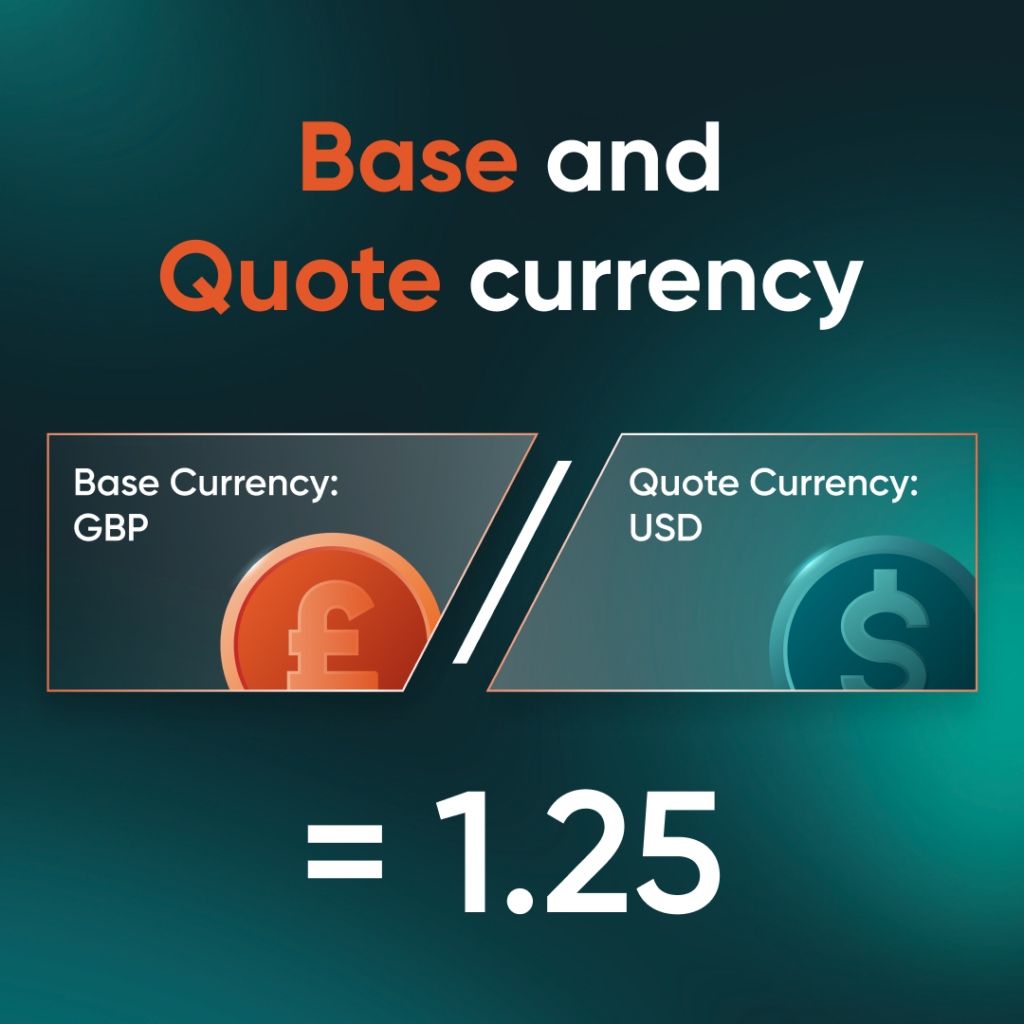
A currency pair contains a base currency and a quote currency.
For NZD/USD:
- NZD is the base currency.
- USD is the quote currency.
- The price tells you how many US dollars are represented by one New Zealand dollar.
If NZD/USD moves from 0.6000 to 0.6100, the NZD has risen relative to the USD.
If it falls from 0.6000 to 0.5900, the NZD has fallen relative to the USD.
This relative relationship is crucial. There is no currency pair where you are simply asking, “Will the New Zealand dollar go up?” You are always asking, “Will it go up or down relative to the other currency?”
The Reserve Bank of New Zealand publishes exchange-rate data covering the NZD against major international currencies and also tracks the NZD Trade Weighted Index against a basket of major trading partners.
How do Forex traders make or lose money?
A trader can potentially profit when the market moves in the direction of their position.
For example:
- You buy EUR/USD.
- EUR/USD rises.
- You close the position at a higher price.
- The price difference, after applicable trading costs, contributes to your gain.
The reverse produces a loss.
Some trading products also allow traders to sell or “go short” when they expect a market to decline. In that case, a falling price can potentially benefit the position, while a rising price can cause a loss.
There is no reliable shortcut that guarantees profitable trades. The FMA specifically warns that Forex trading for profit is very risky and that borrowing money to trade can increase both gains and losses.
What are pips, spreads and lots?
Beginners will encounter these terms quickly.
Pip
A pip is a standardised unit used to describe a small change in a currency pair’s exchange rate. For many major currency pairs, it represents the fourth decimal place.
For example, a move from 1.1000 to 1.1001 is one pip.
For Japanese yen pairs, conventions commonly use the second decimal place instead.
Spread
The spread is the difference between the price at which you can buy and the price at which you can sell.
For example, if a broker quotes:
- Buy: 1.1002
- Sell: 1.1000
the difference is two pips.
The spread is one of the costs traders need to understand before opening a position.
Lot
A lot describes a position size. Different brokers and products can support different position sizes, including smaller fractional positions suitable for retail accounts.
The important beginner lesson is that position size affects how much each price movement is worth. A 20-pip move isn’t automatically a $20 gain or loss.
What is leverage in Forex?
Leverage allows a trader to obtain exposure to a position larger than the cash amount they put up as margin.
For example, with 10:1 leverage, a $1,000 margin amount could provide exposure of up to $10,000, depending on the product and provider.
That sounds attractive, but the risk is the part beginners should focus on.
If the $10,000 exposure moves against you by 1%, the change in value is $100. The leverage hasn’t made the underlying market less risky. It has made the trader’s account more sensitive to that market movement.
The FMA has highlighted leverage as a significant risk for retail derivatives traders. Its current derivatives-issuer framework requires licensed providers making regulated offers to comply with licensing conditions, while the FMA has also been reviewing leverage and suitability requirements for derivatives issuers.
Beginner rule: don’t choose leverage because a broker advertises a large maximum. First understand position size, margin and how much you could lose.
Why do Forex prices move?
Currencies move because the market continually reassesses their relative economic and financial outlook.
Important influences include:
- Central-bank interest-rate decisions
- Inflation
- Employment and economic-growth data
- Government policy
- Political and geopolitical developments
- Commodity prices
- Investor risk appetite
- Expectations about future interest rates
For New Zealand traders, the NZD can also be influenced by developments affecting New Zealand’s economy and major trading partners. The RBNZ’s exchange-rate data and monetary-policy publications provide useful primary sources for understanding the NZD rather than relying solely on commentary from trading websites.
⇒ Source: Reserve Bank of New Zealand exchange rate data
A common beginner mistake is to assume that one piece of “good news” must make a currency rise. Markets trade on expectations, so a result can sometimes have the opposite effect from what a newcomer expects.
What is Forex trading for beginners supposed to look like?
A sensible beginner process is less about finding a “winning strategy” and more about learning the mechanics before risking meaningful money.
Step 1: Learn the basic vocabulary
Understand currency pairs, pips, spreads, lots, leverage, margin, stop-loss orders and position size.
Step 2: Understand the product
Find out whether you’re trading spot currency, a CFD, a forward, an option or another derivative. Don’t assume all Forex accounts work the same way.
Step 3: Check the provider
Look at who operates the service, which entity your account is with, what regulator applies and what protections are available in your jurisdiction.
For New Zealand residents, the FMA says a derivatives issuer making a regulated offer of derivatives to retail investors must be licensed.
Step 4: Practise before increasing risk
A demo account can help you learn how orders, spreads and position sizes work without immediately risking real money. A demo result, however, doesn’t prove that a live strategy will be profitable.
Step 5: Learn risk management
Before entering a trade, know how much you could lose if the market moves against you.
 Forex risk management for beginners
Step 6: Keep records
Record why you entered, where you exited, what size you traded and what happened. A trading journal can reveal mistakes that aren’t obvious from individual trades.
Common Forex mistakes beginners make
Treating Forex like easy income
Forex is not a guaranteed income stream. The possibility of profit comes with the possibility of loss.
Using too much leverage
A small adverse price movement can have a disproportionate effect on a highly leveraged account.
Ignoring trading costs
Spreads, commissions, financing or overnight charges and other costs can affect results.
Trading because of a headline
A news story may already be reflected in market prices. Trading simply because something sounds positive or negative is not the same as having a tested trading method.
Confusing a demo account with real trading
Real-money trading introduces psychological pressure that a practice account cannot fully reproduce.
Choosing a broker based only on leverage
A high maximum leverage figure isn’t automatically an advantage. Regulation, product terms, costs, execution arrangements, client-money protections and suitability requirements deserve attention too.
Is Forex trading legal in New Zealand?
Forex trading isn’t simply one single legal category, so the answer depends on what product is being offered and by whom.
The FMA states that a derivatives issuer making a regulated offer of derivatives to retail investors in New Zealand must be licensed. Its definition of derivatives includes several products linked to exchange rates.
⇒ Source: FMA derivatives issuer regulatory framework
The FMA also warns New Zealand consumers about the risks of Forex trading and recommends checking that a provider is appropriately licensed.
This doesn’t mean every foreign exchange transaction is a retail leveraged trading product. Businesses, travellers and investors may exchange currencies for many legitimate reasons, including payments, investment and hedging. The RBNZ notes that exporters, importers, borrowers and investors rely on foreign-exchange markets as part of New Zealand’s economy.
⇒ Source: RBNZ foreign currency reserves information
What about Forex tax in New Zealand?
Tax treatment depends on the nature of the activity, the financial product, how it is held or traded and the individual’s circumstances.
New Zealand’s Inland Revenue provides rules and methods for converting overseas-currency amounts into NZD for tax purposes and notes that special rules can apply to arrangements such as financial arrangements and foreign investment funds.
⇒ Source: Inland Revenue foreign currency conversion rules
For that reason, don’t assume that a Forex gain or loss is automatically taxed in one particular way. Keep appropriate records and check current IRD guidance or obtain professional tax advice for your circumstances.
This article is general educational information, not personalised financial, investment, legal or tax advice. Regulations and tax treatment can change and differ between jurisdictions.
Is Forex trading suitable for beginners?
Learning about Forex can be suitable for a beginner. That doesn’t mean leveraged Forex trading is suitable for every beginner.
A useful distinction is:
Learning Forex: low financial risk and focused on understanding the market.
Trading Forex with real money: involves the possibility of losing money and requires decisions about product selection, position size and risk.
If you are still learning what a pip, spread or margin requirement means, there’s little reason to rush into a large live position.
The strongest first goal is not “How much can I make?” It is “Do I understand what can make this trade lose money?”
KEY TAKEAWAYS
- Forex is the global market for exchanging currencies.
- Currencies are quoted in pairs, so you’re always comparing one currency with another.
- A Forex position can gain or lose value as the exchange rate changes.
- Retail Forex often involves derivatives and leverage rather than physical delivery of currencies.
- Leverage can magnify losses as well as gains.
- Trading costs such as spreads and commissions affect results.
- New Zealand residents should check the provider’s regulatory status and understand the specific product being offered.
- Forex trading is risky and should not be treated as guaranteed income.
FAQ’s
Can you make money trading Forex?
Yes, it is possible to make a profit on individual Forex trades, but losses are also possible and no trading strategy guarantees profits. Costs, leverage and market volatility can significantly affect results.
How much money do I need to start Forex trading?
There is no universal minimum. Brokers and products have different account and position-size requirements. A more useful question for a beginner is how much money they can afford to lose without affecting essential expenses.
Is Forex trading gambling?
Forex trading involves speculation, but it isn’t automatically the same thing as gambling. A trader can use economic analysis, market research and a defined risk-management process. However, trading without a plan or simply betting on short-term price movements can behave much like gambling.
What is the easiest currency pair for a beginner?
There isn’t one universally “best” pair. Major pairs such as EUR/USD and USD/JPY are widely followed, while NZD/USD may be particularly familiar to New Zealand readers. Beginners should focus on understanding one or two markets rather than constantly switching between many pairs.
Can I trade Forex from New Zealand?
New Zealand residents can access foreign-exchange products, but the regulatory treatment depends on the specific product and provider. The FMA advises consumers to check that providers offering regulated derivative products are appropriately licensed.
What is the difference between Forex and the stock market?
Forex focuses on currencies, while stock markets involve shares or other securities representing companies. Forex pairs compare two currencies, whereas buying a conventional company share generally gives the investor an ownership interest in that company.
Is Forex open 24 hours a day?
The global foreign-exchange market operates across international financial centres and is commonly described as operating around the clock during the working week. However, the exact trading hours, maintenance periods and available products depend on the provider and instrument. Beginners should check the specific trading schedule supplied by their broker rather than assuming every Forex product is continuously available.