

If you’re learning Forex, you’ve probably encountered pairs such as EUR/USD and USD/JPY. These are major currency pairs because the US dollar is involved. But what about EUR/GBP, AUD/NZD or EUR/CHF?
These are commonly called minor forex pairs, or currency crosses.
In simple terms, minor forex pairs are currency pairs that generally don’t include the US dollar. They can still be actively traded, but they typically have different liquidity, spreads and trading characteristics from the major pairs.
The terminology isn’t completely standard across every broker, so you’ll sometimes see the same pair described as a “cross” rather than a “minor.” That distinction is useful for beginners because it prevents you from assuming that every broker uses exactly the same classification.
QUICK ANSWER
What are minor forex pairs?
Minor forex pairs are currency pairs that generally do not include the US dollar, such as EUR/GBP, EUR/CHF, GBP/JPY and AUD/NZD. They’re also commonly called currency crosses.
They can have different spreads, liquidity and volatility from major USD pairs. “Minor” doesn’t mean unimportant or automatically safer. The exact classification can also vary between brokers.
What are minor forex pairs?
Minor forex pairs are currency pairs that usually combine two currencies other than the US dollar.
For example:
| Minor pair | Currencies involved |
|---|---|
| EUR/GBP | Euro and British pound |
| EUR/CHF | Euro and Swiss franc |
| GBP/JPY | British pound and Japanese yen |
| AUD/NZD | Australian dollar and New Zealand dollar |
| EUR/AUD | Euro and Australian dollar |
| GBP/AUD | British pound and Australian dollar |
| CAD/JPY | Canadian dollar and Japanese yen |
Compare these with major pairs such as EUR/USD, GBP/USD and USD/JPY, where the US dollar is one side of the pair.
The term currency cross is often more precise. A cross is simply a currency pair that doesn’t contain USD. “Minor” is a market convention rather than a universal technical classification.
⇒ Source: The BIS 2025 Triennial Central Bank Survey provides a current overview of global foreign-exchange market activity and trading volumes.
⇒ Source: The BIS Quarterly Review provides additional context on recent changes in global FX trading activity and currency composition.
Why are they called “minor”?
“Minor” doesn’t mean unimportant.
It generally reflects the fact that these pairs tend to have less overall trading activity and liquidity than the most heavily traded USD pairs. The Bank for International Settlements’ latest triennial survey confirms that global FX activity remains heavily concentrated in major currencies, while trading in other currencies has also grown significantly.
So a minor pair can still be a substantial and actively traded market.
How do minor currency pairs work?
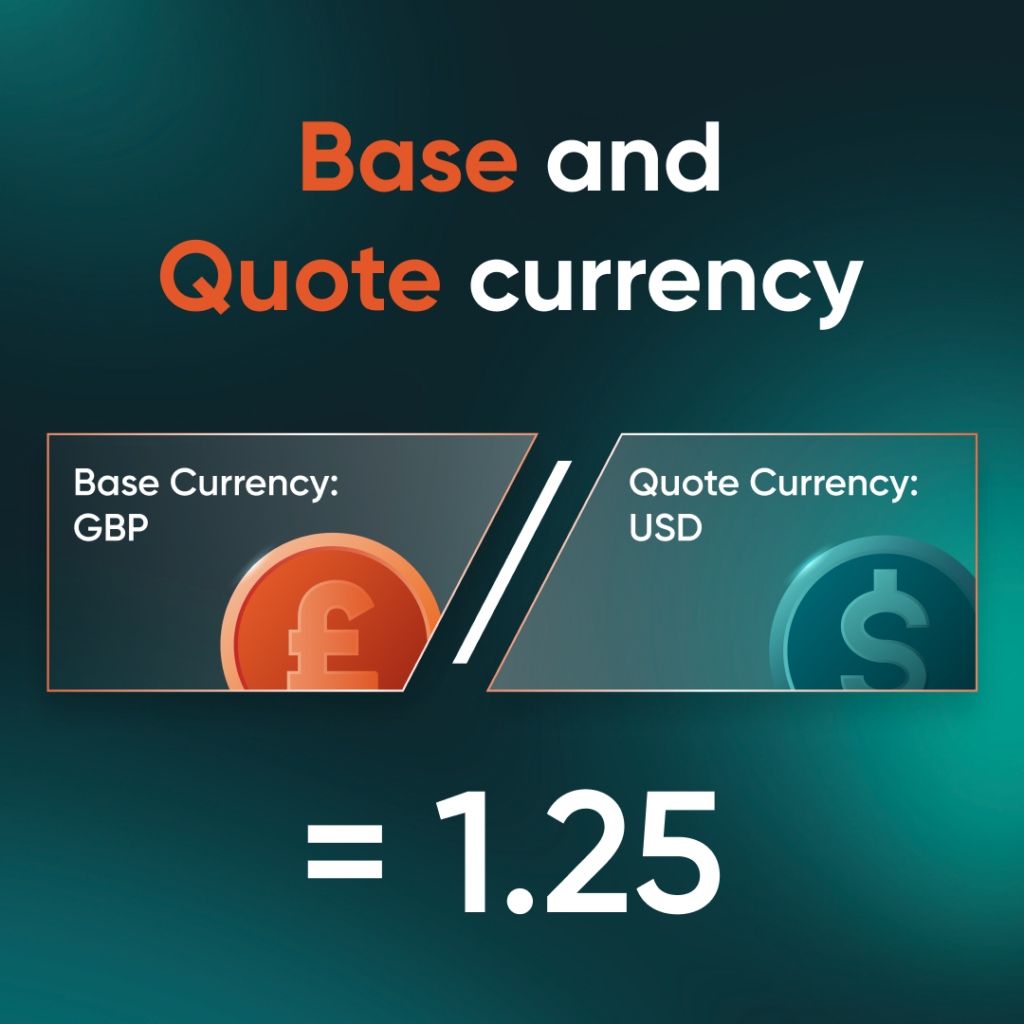
A minor pair works in exactly the same basic way as any other Forex pair.
Take EUR/GBP as an example.
If EUR/GBP is quoted at 0.8600, the quote means:
€1 = £0.86
If you buy EUR/GBP, you’re effectively buying euros and selling pounds.
If the exchange rate rises to 0.8700, the euro has strengthened relative to the pound. If it falls to 0.8500, the euro has weakened relative to the pound.
The same basic principle applies to AUD/NZD, GBP/JPY, EUR/CHF and other crosses.
 If you’re new to Forex, understanding what a currency pair is makes it much easier to understand minor pairs and currency crosses.
Common minor forex pairs
There isn’t one universally agreed list of “minor” pairs. Broker classifications can differ, and some pairs may be grouped differently depending on liquidity and the broker’s product range.
Some commonly encountered crosses include:
EUR/GBP
EUR/GBP compares the euro with the British pound.
For a beginner, this is a useful example because neither currency is USD. The pair can be influenced by economic data, interest-rate expectations and political or economic developments affecting the euro area and United Kingdom.
EUR/CHF
EUR/CHF compares the euro with the Swiss franc.
The Swiss franc has a reputation as a defensive or “safe-haven” currency, although that doesn’t mean EUR/CHF will automatically behave predictably during market stress.
GBP/JPY
GBP/JPY combines two currencies that can respond differently to changes in interest-rate expectations and market sentiment.
It’s sometimes described by traders as a more volatile cross, but volatility changes over time. A pair shouldn’t be labelled “high risk” solely because it has a reputation for large moves.
AUD/NZD
AUD/NZD compares two closely connected economies.
This pair is particularly relevant to New Zealand traders because it directly compares the New Zealand dollar with the Australian dollar. The Reserve Bank of New Zealand publishes NZD exchange-rate data against major international currencies and tracks the NZD through its Trade Weighted Index.
That doesn’t make AUD/NZD inherently easier or safer to trade. It simply makes the pair particularly relevant to people who follow both economies.
Minor pairs vs major pairs
The easiest way to understand the difference is to focus on the currencies involved.
| Feature | Major forex pairs | Minor forex pairs |
|---|---|---|
| USD included? | Yes | Usually no |
| Examples | EUR/USD, USD/JPY | EUR/GBP, AUD/NZD |
| Typical liquidity | Generally very high | Often lower than majors |
| Spreads | Often relatively competitive | Can be wider, depending on pair and broker |
| Price drivers | Global and US factors | More directly influenced by both non-USD economies |
| Beginner consideration | Often simpler starting point | Requires understanding two non-USD markets |
These are broad characteristics, not guarantees. A particularly active minor pair can have better trading conditions than a less-liquid currency pair.
For comparison, our guide to major forex pairs explains the USD-based pairs that dominate Forex trading.
Why do traders use minor forex pairs?
The main attraction is exposure to two currencies without directly trading USD.
Imagine a trader has a view that the Australian dollar will strengthen relative to the New Zealand dollar. AUD/NZD provides a direct way to express that currency relationship.
A trader studying European currencies might similarly watch EUR/GBP instead of EUR/USD if the question they’re interested in is specifically how the euro is performing against sterling.
This can make crosses useful for learning how different economies interact through exchange rates.
However, a more interesting currency relationship doesn’t automatically mean a better trading opportunity.
What should beginners watch out for?
1. Assuming every minor pair has the same spread
The spread is the difference between the bid and ask price.
Minor pairs can have wider spreads than highly liquid major pairs, particularly during less active market periods or around major announcements. Your actual trading costs depend on the pair, broker, market conditions and account type.
If you’re comparing trading costs, learn more about forex spreads and how the bid-ask difference can affect a trade.
2. Thinking “minor” means “less risky”
This is one of the most important misconceptions to avoid.
A minor pair isn’t automatically safer or more dangerous than a major. Risk depends on factors such as position size, price volatility, leverage, stop-loss placement and the amount of capital exposed.
Forex and leveraged derivatives can produce substantial losses. New Zealand’s Financial Markets Authority warns that derivatives are high risk and that gains or losses can be many times the amount initially required.
3. Ignoring both economies
With EUR/USD, a beginner quickly learns to pay attention to the euro area and United States.
With EUR/GBP, you need to understand factors affecting both the euro area and the UK.
That means economic releases, central-bank expectations and political developments can come from either side of the pair.
4. Confusing volatility with opportunity
A larger price movement can look attractive, but movement cuts both ways.
If a pair moves against your position, the loss can increase just as quickly as a potential gain. Leverage can amplify this effect.
For beginners, the useful question isn’t “Which pair moves the most?” but “Do I understand what can move this pair, and can I manage the risk?”
A simple minor-pair example
Suppose EUR/GBP is quoted at:
0.8600
You buy 10,000 EUR/GBP units.
Ignoring spread, commissions, financing and other costs for this illustration, a move from 0.8600 to 0.8650 represents a change of:
0.8650 − 0.8600 = 0.0050
For a position of 10,000 euros:
10,000 × 0.0050 = £50
So the illustrative gross change would be £50.
This isn’t a guaranteed trading outcome and doesn’t represent the total profit or loss you would necessarily receive. Real trading results depend on the position structure, account currency, spread, commission, financing and broker conventions.
To understand the price movement in this example, it helps to know what a forex pip is.
Are minor forex pairs suitable for beginners?
They can be studied by beginners, but that doesn’t mean every minor pair is an ideal first trading instrument.
A sensible learning process is:
- Understand how currency pairs work.
- Learn what the bid, ask and spread mean.
- Understand pips and position size.
- Study the two economies behind the pair.
- Check the typical trading conditions offered by your broker.
- Practise on a demo account before risking real money.
- Understand how leverage can increase both gains and losses.
Beginners often benefit from becoming familiar with a small number of pairs rather than constantly switching between markets.
Before looking at individual currency crosses, beginners can review how Forex trading works to understand the basics of buying and selling currencies.
Minor pairs and New Zealand traders
For New Zealand readers, crosses involving NZD can be particularly interesting from an educational perspective.
AUD/NZD, for example, compares two neighbouring economies with significant economic and financial links. But the same risk principles apply: relevance to the local economy doesn’t make a pair automatically easier to trade.
The RBNZ publishes current exchange-rate and FX-turnover statistics, providing an authoritative source for observing NZD market activity rather than relying on outdated claims about which currencies are “most active.”
If you’re trading Forex derivatives from New Zealand, regulation is another issue to check separately from the currency pair itself. The FMA says businesses offering derivatives to retail investors in New Zealand must be licensed and advises investors to check the provider’s licensing status.
That is a provider and product issue, not a claim that a particular minor pair is regulated or safer.
⇒ Source: For New Zealand dollar data, the RBNZ Exchange Rates and Trade Weighted Index provides official exchange-rate information and related statistics.
⇒ Source: The RBNZ Foreign Exchange Turnover statistics provide official data on foreign-exchange market activity involving the New Zealand dollar.
Minor pairs vs exotic pairs
These terms are sometimes confused.
Minor pairs generally involve relatively established, actively traded currencies and exclude USD.
Exotic pairs typically combine a major currency with a currency from a smaller or emerging market.
For example, EUR/GBP is commonly treated as a cross/minor, while a pair involving USD and a less-traded emerging-market currency may be classified as exotic.
The exact labels can vary between brokers, so check the broker’s own instrument classification rather than relying entirely on terminology.
What matters most when comparing minor pairs?
Instead of choosing a pair simply because you’ve heard it’s popular, look at:
- Spread: What does it typically cost to enter and exit?
- Liquidity: How actively is the pair traded?
- Volatility: How large can its price movements be?
- Trading hours: When are both underlying markets most active?
- Economic drivers: Which central banks and economies influence it?
- Position size: How much are you actually putting at risk?
- Leverage: How much exposure are you controlling relative to your account capital?
Knowing Forex market hours can also help you understand when different currency markets are most active.
A practical beginner checklist
Before considering a minor pair, ask yourself:
- Do I know what both currencies represent?
- Can I explain why the exchange rate might rise or fall?
- Have I checked the current spread?
- Do I understand the pip value for my position size?
- Have I considered the economic calendar for both currencies?
- Do I understand the leverage attached to the trade?
- Can I afford the potential loss?
If you can’t answer these questions yet, there’s no need to rush into trading the pair. Understanding the mechanics first is more useful than simply memorising a list of currency symbols.
Financial-risk note for New Zealand readers
This article is general educational information, not personal financial, investment, tax or legal advice. Forex trading and leveraged derivatives involve significant risk, and rules can differ between jurisdictions. New Zealand readers should verify a provider’s current regulatory status with the before using a retail derivatives provider. Individual tax circumstances should be checked with or a qualified tax professional where relevant.
⇒ Source: New Zealand readers can check the FMA guidance on derivatives for information about derivative risks and the regulatory framework for providers.
KEY TAKEAWAYS
- Minor forex pairs generally contain two currencies other than USD.
- They are also commonly called currency crosses.
- Examples include EUR/GBP, EUR/CHF, GBP/JPY and AUD/NZD.
- Minor pairs can have different spreads and liquidity from major pairs.
- A minor pair isn’t automatically safer simply because it excludes USD.
- Understanding both economies behind a pair is essential.
- New Zealand traders should separately check the regulatory status of any retail derivatives provider.
FAQ’s
1. What are the most common minor forex pairs?
Commonly encountered crosses include EUR/GBP, EUR/CHF, GBP/JPY, AUD/NZD, EUR/AUD, GBP/AUD and CAD/JPY. The exact classification varies between brokers.
2. Are minor forex pairs the same as currency crosses?
Usually, yes. “Currency cross” describes a pair without USD, while “minor” is a more informal market classification. Crosses are often divided into minor and exotic categories.
3. Are minor forex pairs riskier than major pairs?
Not automatically. Risk depends on factors including volatility, position size, leverage, spread and the trader’s risk management. Some minor pairs may have wider spreads or different liquidity characteristics.
4. Is AUD/NZD a minor forex pair?
AUD/NZD is commonly treated as a minor pair or currency cross because it contains the Australian and New Zealand dollars rather than USD.
5. Do minor forex pairs have wider spreads?
They can, although this isn’t true in every market condition. Spreads depend on the particular pair, liquidity, broker and trading conditions.
6. Can beginners trade minor forex pairs?
Beginners can learn about and practise trading minor pairs, but they should first understand currency-pair pricing, spreads, pips, position sizing and leverage. A demo account can be useful for learning without immediately risking real capital.
7. What is the difference between minor and exotic forex pairs?
Minor pairs generally involve relatively established and actively traded currencies without USD. Exotic pairs typically combine a major currency with a less-traded or emerging-market currency. Broker classifications can differ.