
If you’re new to Forex, you’ll quickly come across the word pip. It sounds technical, but the basic idea is straightforward: a pip is a standard unit used to describe a small movement in a currency pair’s exchange rate.
For most non-Japanese-yen currency pairs, one pip is 0.0001 of the quoted exchange rate. For pairs involving the Japanese yen, one pip is generally 0.01.
Understanding pips helps you read price movements, calculate potential profit or loss, compare spreads and understand how much a trade has moved.
 Learn the basics of what is forex trading to understand how the market works before diving into pips.
QUICK ANSWER
A pip in forex trading is a standard unit used to measure price movement in a currency pair. For most non-JPY pairs, 1 pip equals 0.0001 of the exchange rate. For JPY pairs, 1 pip is generally 0.01.
For example, if EUR/USD rises from 1.0850 to 1.0870, it has moved 20 pips. The money gained or lost from those 20 pips depends on the position size, currency pair and account currency.
What Is a Pip in Forex?
A pip is a standard measurement of price movement in the foreign exchange market.
For example, suppose EUR/USD moves from:
1.0850 → 1.0851
The pair has moved 1 pip higher.
If it moves from:
1.0850 → 1.0875
that’s a movement of 25 pips.
For most major currency pairs, the pip is found at the fourth decimal place. Japanese-yen pairs are the common exception, where the pip is normally the second decimal place.
| Currency pair | Example movement | Pip movement |
|---|---|---|
| EUR/USD | 1.0850 → 1.0851 | 1 pip |
| GBP/USD | 1.2700 → 1.2710 | 10 pips |
| AUD/USD | 0.6600 → 0.6615 | 15 pips |
| USD/JPY | 150.20 → 150.21 | 1 pip |
The term “pip” is commonly described as meaning “point in percentage”, although traders generally use the word simply as a standard unit for measuring FX price changes.
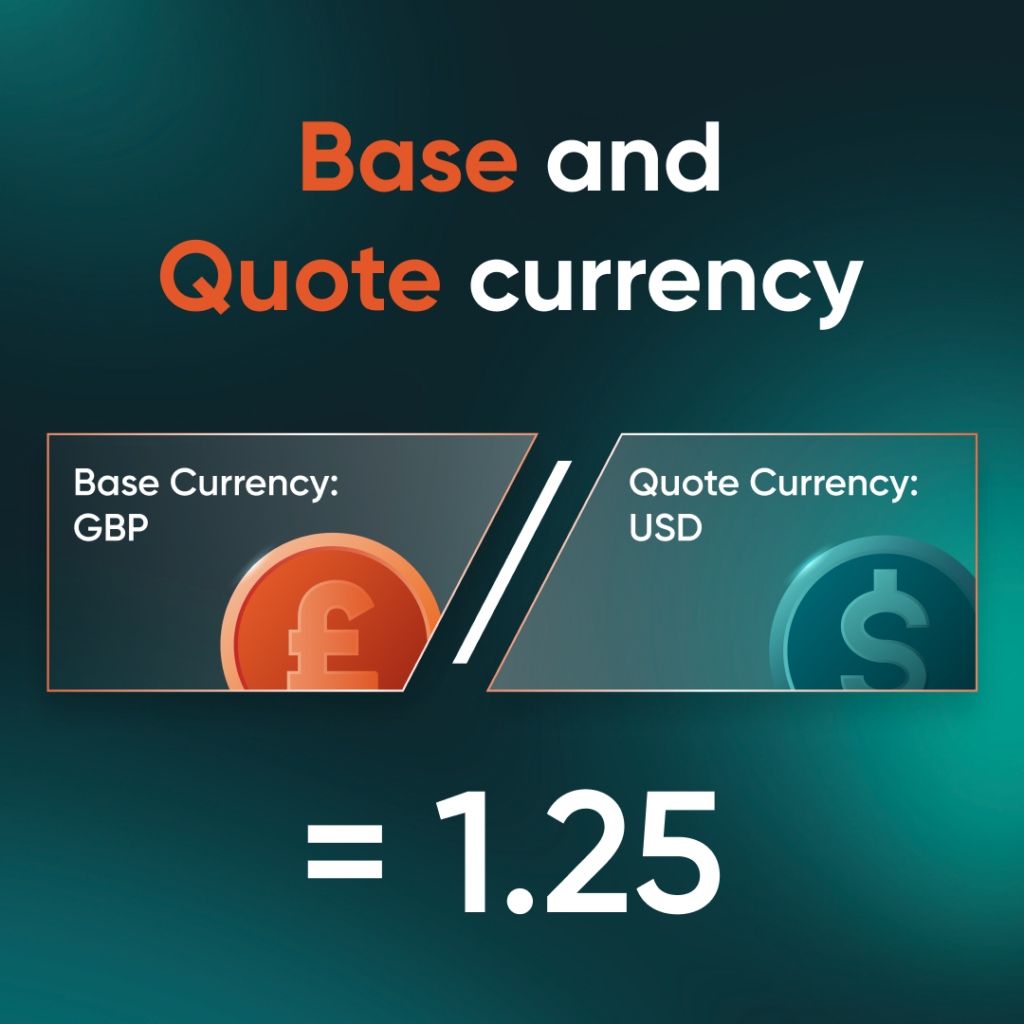
A pip always relates to a what is a currency pair, so understanding how pairs are quoted is essential.
Why Do Forex Traders Use Pips?
Currency exchange rates can move by very small amounts. Saying that EUR/USD increased by 0.0025 isn’t as convenient as saying it moved 25 pips.
Pips give traders a common language for discussing movements.
You’ll often hear statements such as:
- “EUR/USD moved 30 pips.”
- “The spread is 1.5 pips.”
- “The stop-loss is 20 pips away.”
- “The trade gained 40 pips.”
Pips are therefore useful for describing price movement, trading costs and potential profit or loss.
But there’s an important distinction for beginners:
A pip measures price movement. It does not represent a fixed amount of money.
One trader’s 20-pip movement could be worth a few dollars, while another trader’s 20-pip movement could be worth hundreds of dollars, depending largely on position size and the currency pair.
How Do You Calculate Pips?
For most non-JPY pairs, the basic calculation is:
Number of pips = Price movement ÷ 0.0001
For example:
EUR/USD moves from 1.0820 to 1.0855.
The price difference is:
1.0855 − 1.0820 = 0.0035
Then:
0.0035 ÷ 0.0001 = 35 pips
So the market moved 35 pips.
For a JPY pair, the standard pip size is generally 0.01.
Suppose USD/JPY moves from 149.20 to 149.75:
149.75 − 149.20 = 0.55
0.55 ÷ 0.01 = 55 pips
The movement is therefore 55 pips.
What Is a Pipette?
Many modern trading platforms display an additional decimal place.
For example, instead of:
EUR/USD = 1.0850
you might see:
EUR/USD = 1.08500
The fifth decimal place represents a fractional pip, commonly called a pipette.
So:
1.08500 → 1.08501
is one pipette, or one-tenth of a pip.
And:
1.08500 → 1.08510
is one full pip.
For JPY pairs, the equivalent extra decimal is normally the third decimal place.
This can cause confusion because some platforms use the word point for their smallest displayed price movement. Always check how your particular broker or trading platform defines its price increments.
How Much Is One Pip Worth?
This is where the concept becomes more useful for actual trading.
The monetary value of a pip depends primarily on:
- the currency pair
- your position size
- the exchange rate
- the currency in which your account is denominated
For a standard 100,000-unit position in EUR/USD, one pip is 0.0001 × 100,000 = $10, assuming the account’s relevant calculation is in USD. A 10,000-unit position would be approximately $1 per pip.
Simple EUR/USD example
Suppose you trade 10,000 EUR of EUR/USD.
One pip:
10,000 × 0.0001 = $1
If EUR/USD then moves 20 pips in your favour, the illustrative price movement would correspond to:
20 × $1 = $20
If the same position moved 20 pips against you, the movement would correspond to a $20 loss, before considering spread, commission, financing or other trading costs.
This is why saying “I only risk 20 pips” doesn’t tell you how much money is actually at risk. You need to know the position size as well.
A useful formula
For a pair where the quote currency is the same as your account currency:
Pip value = Position size × Pip size
For example:
10,000 × 0.0001 = $1 per pip
For other currency pairs or account currencies, the result needs to be converted using the relevant exchange rate. Your broker’s trading platform may calculate and display the pip value automatically.
Actual trading results can also differ because of spreads, commissions, execution prices, financing costs and other charges.
Pips and the Forex Spread
A spread is the difference between the price at which you can sell and the price at which you can buy a currency pair.
Suppose a broker quotes EUR/USD as:
Bid: 1.08500
Ask: 1.08520
The difference is:
0.00020 = 2 pips
So the spread is 2 pips.
This matters because a trade can start with a small unrealised loss caused by the spread. The exact cost depends on the position size and the broker’s pricing.
Pips therefore aren’t only used to measure how far a market has moved. They’re also a convenient way of discussing one component of trading costs.
Pips, Lots and Position Size
Another beginner mistake is treating a pip and a lot as if they’re the same thing.
They aren’t.
A pip measures price movement.
A lot describes the size of a forex position. For example, a commonly used standard lot represents 100,000 units of the base currency.
Think of it this way:
| Term | What it tells you |
|---|---|
| Pip | How far the exchange rate moved |
| Lot/position size | How much currency you are trading |
| Pip value | How much one pip is worth for your position |
| Spread | Difference between bid and ask prices |
The same 25-pip market movement can have very different financial consequences depending on position size.
Common Beginner Mistakes With Pips
Assuming one pip always equals $10
A 100,000-unit EUR/USD position can have a pip value of about $10 when the quote currency is USD, but that doesn’t mean every forex trade has a $10 pip value.
Position size and currency pair matter.
Confusing a pip with a pipette
If EUR/USD is quoted at 1.08506, don’t automatically treat the final digit as a full pip. On a five-decimal quote, the fifth decimal is normally a fractional pip.
Ignoring JPY pairs
The normal fourth-decimal rule doesn’t apply to USD/JPY and other JPY pairs. Their standard pip is generally the second decimal place.
Thinking more pips automatically means more profit
A 50-pip gain sounds impressive, but its monetary value depends on the position size and currency conversion.
Likewise, a small number of pips can represent a meaningful loss if the position is large.
Forgetting trading costs
A price movement measured in pips isn’t the same thing as your final profit. Spread, commission, financing and execution can all affect the result.
What Does a Pip Mean for a Beginner?
The easiest way to think about a pip is:
A pip tells you how much a forex exchange rate has moved in a standardised unit.
To see how price movements like pips fit into real trades, read how forex trading works.
Before worrying about strategies, focus on being able to answer four questions when looking at a trade:
- Which currency pair am I trading?
- Where is the pip position in the quote?
- How many pips has the price moved?
- What is one pip worth for my position size and account currency?
Once those become familiar, concepts such as stop-loss distance, spread, position sizing and risk management become much easier to understand.
A note for New Zealand readers
The definition of a pip is the same for NZD/USD as it is for other non-JPY currency pairs. For example, a move from 0.6100 to 0.6120 is a 20-pip movement.
The regulatory side of forex trading is separate from the definition of a pip. In New Zealand, the Financial Markets Authority states that providers offering derivatives to retail investors must generally be licensed where the offer is a regulated derivative offer. The FMA also warns that forex and leveraged derivative trading can be very high risk.
This is general educational information, not personal financial or tax advice. NZ readers should check the FMA’s current licensing information and the product disclosure information for any provider they are considering.
Final Takeaway
A forex pip is a standard unit for measuring a small change in a currency pair’s exchange rate. For most currency pairs, one pip is 0.0001; for JPY pairs, it is generally 0.01.
The key beginner lesson is that pips measure movement, not money. The monetary value of that movement depends on your position size, currency pair, exchange rate and account currency.
Once you understand pips, the next useful step is learning how currency pairs themselves are quoted and how those quotes translate into trades. See our guide to what is a currency pair for that foundation.
KEY TAKEAWAYS
- A pip measures a small movement in a forex exchange rate.
- For most currency pairs, 1 pip = 0.0001.
- For JPY pairs, 1 pip = 0.01 in most standard quotations.
- A pipette is a fractional pip, commonly one-tenth of a pip.
- Pip value depends on position size, currency pair and exchange-rate conversion.
- A pip is a measure of price movement, not a fixed dollar amount.
- Spread, commission and other trading costs can affect the actual result of a trade.
FAQ’s
What does pip mean in forex?
A pip is a standard unit used to describe movement in a forex exchange rate. For most currency pairs it represents 0.0001, while JPY pairs generally use 0.01.
How many dollars is 1 pip?
There isn’t one universal dollar value. For example, one pip on a 10,000-unit EUR/USD position is approximately $1 when USD is the relevant quote/account currency. A larger or smaller position changes the pip value.
How many pips is 0.0010?
For a typical non-JPY currency pair, 0.0010 represents 10 pips, because 0.0010 ÷ 0.0001 = 10.
What is the difference between a pip and a pipette?
A pip is the standard price-movement unit. A pipette is a fractional pip. On a typical five-decimal EUR/USD quote, 10 pipettes equal one pip.
Is a pip the same as a point?
Not necessarily. Trading platforms can use “point” differently. On many five-decimal forex quotes, the smallest displayed movement is one-tenth of a pip and may be called a point or pipette. Check the platform’s specifications rather than assuming the terms are interchangeable.
How do I calculate pips on USD/JPY?
For a standard USD/JPY quotation, divide the price movement by 0.01. For example, 150.20 to 150.50 is 0.30, which equals 30 pips.
Does a higher number of pips mean a higher profit?
No. Profit or loss depends on both the number of pips and the monetary value of each pip. Position size is a major factor.
Why are pips important in forex?
Pips provide a common way to describe price movements, spreads and the distance between an entry price and levels such as a stop-loss. They also help traders estimate the financial effect of a price movement when combined with pip value.
SOURCES
- Financial Markets Authority (New Zealand): Foreign exchange trading — used to verify the NZ-specific risk and regulatory context for forex trading. FMA — Foreign exchange trading
- Financial Markets Authority (New Zealand): Derivatives — used to verify current general information about derivatives and licensing of providers serving NZ retail investors. FMA — Derivatives
- Financial Markets Authority (New Zealand): Derivatives issuers — used to verify the current licensing framework for regulated derivative offers. FMA — Derivatives issuers
- IG: What Is a Pip in Forex Trading? — used as a secondary verification source for the standard pip, JPY-pair exception, pipettes and illustrative pip-value calculations. IG — What is a Pip in Forex Trading